
In the realm of particle size testing, the pursuit of accuracy is paramount.
This article explores a range of techniques essential for precise measurement Particle Size Distribution testing, offering insights into:
- Laser Diffraction Analysis
- Dynamic Light Scattering (DLS)
- Sedimentation Methods
- Microscopy Techniques
- Image Analysis Systems
By delving into these methodologies, professionals seeking reliable particle size data can elevate their analytical capabilities and make informed decisions with confidence.
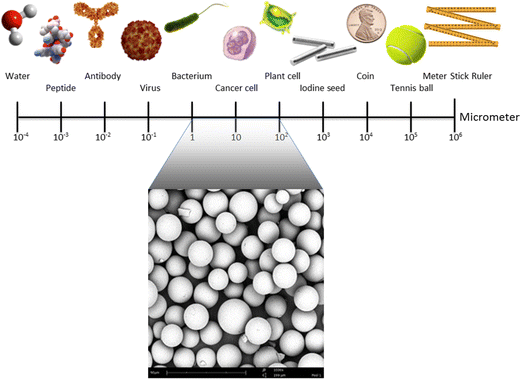
Key Takeaways
- Laser Diffraction Analysis is a widely used method for rapid and precise measurements of particle size distribution.
- Dynamic Light Scattering (DLS) complements laser diffraction analysis by analyzing submicron particles through light intensity fluctuations https://laballiance.com.my/.
- Sedimentation Methods are useful for analyzing larger particles that are not suitable for DLS, providing valuable insights into particle size distribution.
- Microscopy Techniques, such as optical, electron, and scanning probe microscopy, are crucial for accurately determining particle size by direct visualization.
Laser Diffraction Analysis
Laser diffraction analysis is a widely used method in particle size testing due to its ability to provide rapid and precise measurements. By utilizing laser technology, this technique offers a non-destructive way to analyze particles in a sample, making it ideal for industries requiring accurate size distribution data.
The process involves passing a laser beam through a dispersed sample, with detectors measuring the scattered light at various angles. This data is then analyzed to determine the particle size distribution, offering valuable insights for research and quality control purposes.
Laser diffraction analysis is favored for its efficiency and reliability, providing users with essential information to make informed decisions regarding their products or processes.
Dynamic Light Scattering (DLS)
Another effective technique for analyzing particle sizes with precision is Dynamic Light Scattering (DLS), which complements the rapid measurements obtained through laser diffraction analysis. DLS measures the fluctuation in the intensity of light scattered by particles in a suspension, providing information on particle size distribution.
This technique is particularly useful for analyzing particles in the submicron range, offering valuable insights for various industries like pharmaceuticals, nanotechnology, and colloidal chemistry. DLS is non-invasive and can be used for both opaque and transparent samples, making it a versatile tool for particle size analysis.
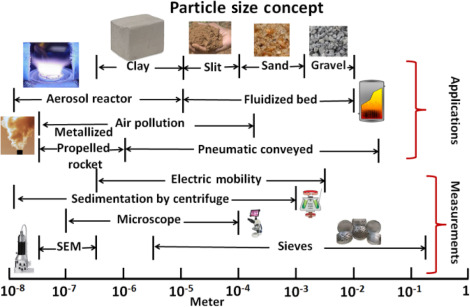
Sedimentation Methods
One essential method that complements techniques like Dynamic Light Scattering (DLS) for precise particle size analysis is sedimentation methods, which provide valuable insights into particle size distribution through the settling behavior of particles in a suspension.
Sedimentation methods involve observing how particles settle under the influence of gravity in a liquid medium, allowing for the determination of particle size based on settling rates. This method is particularly useful for analyzing larger particles that may not be suitable for DLS analysis.
Microscopy Techniques
Microscopy techniques play a crucial role in accurately determining particle size by enabling direct visualization of particles within a sample. By utilizing advanced microscopy methods such as optical microscopy, electron microscopy, and scanning probe microscopy, researchers can observe and measure individual particles with high precision.
Optical microscopy is beneficial for larger particles, offering real-time imaging with relatively simple sample preparation. Electron microscopy, including scanning electron microscopy (SEM) and transmission electron microscopy (TEM), allows for nanoscale particle analysis by using electrons to create detailed images.
Scanning probe microscopy techniques like atomic force microscopy (AFM) provide topographical information on surfaces at the nanoscale level. These techniques empower researchers with the freedom to explore and analyze particles with exceptional accuracy.
Image Analysis Systems
Continuing from the exploration of microscopy techniques, the integration of image analysis systems enhances the accuracy and efficiency of particle size testing through advanced data processing and visualization capabilities.
Image analysis systems utilize sophisticated algorithms to analyze images of particles, enabling precise measurement of particle sizes and shapes. These systems offer freedom from manual measurement errors, providing reliable and repeatable results.
By automating the analysis process, image analysis systems save time and increase productivity in particle size testing. Furthermore, the visualization tools integrated into these systems allow users to interpret data more effectively, facilitating a deeper understanding of particle characteristics.
Conclusion
In conclusion, various techniques are commonly used for accurate particle size testing:
- Laser diffraction analysis
- Dynamic light scattering
- Sedimentation methods
- Microscopy techniques
- Image analysis systems
Each method has its own advantages and limitations, making it important to choose the most appropriate technique based on the specific characteristics of the particles being analyzed.
By utilizing these different techniques, researchers can obtain reliable and precise particle size measurements for a wide range of applications.